The Frame After the Frame: Forty Cousins, One Oak Tree, and the Reunion Portrait That Actually Feels Like Us
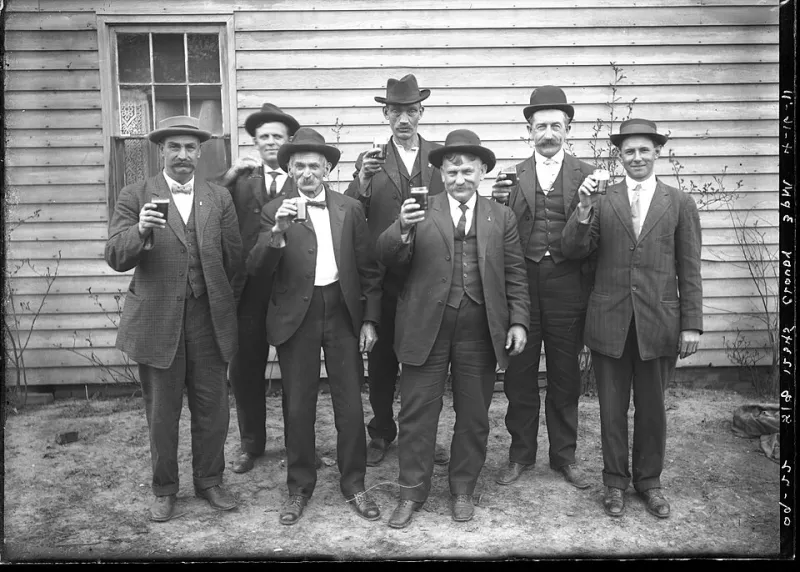
Photo: Warner, Marion G., 1861-1922, Public domain, via Wikimedia Commons
Last July, outside a park pavilion in central Ohio, I watched a woman in a neon visor try to herd forty-one cousins toward a picnic table. It was 1:12 p.m. The sun was directly overhead. A toddler was melting into the grass, two uncles were arguing about whether the cooler had been moved, and someone kept yelling for the family member who had driven the farthest to hurry up. The official reunion portrait was scheduled for 1:15. We did not take it at 1:15.
That is not a failure. That is the normal shape of a family reunion. The group photo is one small event inside a much larger day, and the worst thing a photographer can do is treat it like the main event. I moved our portrait to 10:30 that morning, under the biggest oak tree in the park, and the whole rhythm changed. People were still arriving. Coffee was still hot. Nobody had sunscreen in their eyes yet.
The official portrait is not the day
A reunion portrait is a service to the family, not a coronation. It needs to happen, and it needs to be good enough to print, but it should not eat the afternoon. I tell families up front: we will spend twelve to fifteen minutes on the big group, and then I am going to keep shooting while you go back to being related to each other.
That promise does two things. It lowers the stakes for the people who hate being photographed, and it gives me permission to stay in the background with my camera up. Some of the best frames from a reunion are not the lineup. They are the cousin who crouches to fix a kid's shoe, the aunt who laughs so hard she has to hold the picnic table, the teenager who thinks nobody sees him sneak a piece of cake before the blessing.
Find the shade before you find the rows
Midday sun is the enemy of a big group. It carves dark sockets under every baseball cap and turns a pleasant family into a lineup of squinting suspects. I look for open shade: the north side of a building, a deep pavilion, a wide tree canopy with even light underneath. Dappled light is charming in a portrait of one person and a nightmare in a portrait of forty.
If the shade is shallow, I put the tallest people in the back and let the shorter folks step forward into the softer light. I do not need a perfect studio setup. I need everyone's eyes open and nobody's face half in shadow. On that Ohio morning, the oak gave us a soft green ceiling and a clean background of grass and picnic tables. It looked like the family's actual day, not a rented backdrop.
Start with the people who came to you
Reluctant relatives are not a problem to solve. They are a temperature to read. I never open with a booming call for everyone to gather. I start with the people who are already near me. The kids running laps. The grandmother who claimed the closest folding chair. The uncle who wants to know what camera I am using. By the time I ask for the full group, half the family has already seen me working and decided I am not going to make it weird.
For the actual lineup, I use a simple invitation: anyone near the oak tree, come stand in the shade for a minute. Not everyone. Not the whole reunion. Just the people within earshot. Then I send two outgoing cousins to collect the rest. It works better than a microphone and much better than a clipboard.
Seating without a seating chart
I do not assign seats. A reunion portrait is not a wedding reception. But I do make a few gentle decisions. Elders and anyone who needs to sit go in chairs at the center. Tall folks go in back. Kids go in front, but not so far front that they look like they wandered into the frame by accident. I leave gaps for latecomers and ask people to shift a half-step rather than rearrange the whole group.
The goal is a frame that looks like the family chose its own spots, because it mostly did. I want cousins next to cousins, siblings next to siblings, and the cousin who married in standing somewhere near the cousin who has known him for twenty years. A little natural awkwardness is fine. A perfectly engineered pyramid is not the point.
The ten minutes before and after
This is where the real photographs live. Before the official shot, people are still arriving and greeting each other. After I call the group shot done, there is a collective exhale. Hugs restart. Kids escape. Someone remembers a story from 1998. I keep shooting through all of it.
Those frames are not accidents. They are the reason I build in a buffer. I take the formal group in bursts, check for blinking, take one more safety frame, and then say the magic words: that is it, go eat. The family relaxes, and I stay put. The photograph they will text each other later is usually the one where three cousins are laughing at something outside the frame and the baby is reaching for somebody's sunglasses.
The shot list that is not a shot list
After the big group, I look for small groups that already exist. The siblings. The grandkids. The aunties. The cousins who drove in from three states. I do not force a full round of every possible combination. I watch for clusters and ask for one quick frame while they are still standing together. Five minutes here and there adds up to a richer record than an hour of organized poses.
And I photograph the day itself: the food table, the folding chairs, the hand-painted reunion sign, the cooler with somebody's initials in marker. Those details are the punctuation. They remind you what the people were doing when they were not posing.
By the time the neon visor made her second lap, my card was full of cousins, grandparents, paper plates, and one very patient dog. We took the official portrait at 10:47 a.m. It took thirteen minutes. The rest of the day belonged to the family. That is the version of the reunion I want to give back.