Magnets, Menus, and the Museum We Keep Cold
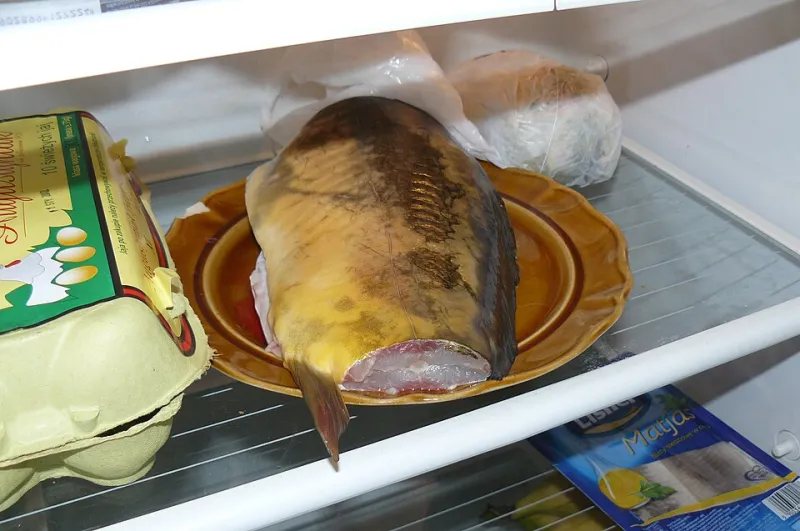
Photo: MOs810, CC BY-SA 4.0, via Wikimedia Commons
I have photographed families in living rooms, backyards, church parking lots, and one memorable garage. But some of the most honest portraits in a house are not hanging on a wall. They are stuck to the refrigerator with a pizza coupon and a magnet from a real estate agent who sold the place two owners ago.
The fridge door is a still life, a bulletin board, and a family portrait in low relief. It is also temporary. A move, a graduation, a new babysitter, a kitchen remodel, or simply a Saturday with a sponge can erase years of small decisions. That is why I now ask clients to let me photograph the refrigerator door before we start the session. Not instead of the people. Alongside them.
A Still Life That Knows Your Schedule
Look closely at any busy refrigerator and you will find a household in layers. There is the school calendar with a dentist appointment circled twice. The takeout menu from the Thai place that everyone agrees is better than the other Thai place. A grocery list in three different handwritings. A photo booth strip from a wedding. A coupon for something nobody will ever buy. A child's drawing of a dog that looks more like a weather system. A magnet shaped like a state someone visited once.
None of it is precious on its own. Together, it is a record of who lives there, what they worry about, what they celebrate, and what they keep forgetting to buy. The refrigerator door is the closest thing many of us have to a family diary that gets updated without anyone deciding to update it.
Why It Belongs in the Archive
Most family archives are curated after the fact. We choose the holiday card photo, the graduation portrait, the picture where everyone is looking at the camera. Those are useful. They are also polished. The fridge door is the unpolished version of the same family. It shows the rhythm of ordinary weeks.
I think of these images as passage photographs. They mark a season of life that is about to change. The toddler who needs a step stool to reach the magnets will not need one next year. The senior who taped up a college acceptance letter will take it down in August. The kitchen that holds all of it may get new cabinets, a different light, or a For Sale sign. A straight-on photograph of the door takes five minutes and preserves all of that before it scatters.
Light It Like a Wall, Not a Shrine
The good news is that refrigerator doors are easy to photograph. The bad news is that they are also reflective, crowded, and often lit by the worst bulb in the house.
Start by turning off the overhead light. It flattens the door and puts a hard glare across every magnet. Instead, use daylight from a nearby window. Open the blinds and let the light come in from the side. If the door sits in a dark corner, bring in a small lamp or a piece of white foam board to bounce light back toward it. A phone camera is fine. A clean lens is better.
Stand directly in front of the door for one frame. Then move a step to the left or right and shoot at a slight angle. The straight-on view reads like a catalog of objects. The angled view shows depth, curled paper, and the little shadows under the magnets. Watch for a bright reflection of a window or a light fixture. If it lands on a shiny photo, shift your position rather than moving the family's stuff.
Compose the Clutter
Do not tidy the refrigerator into something it is not. A blank door with three artfully placed magnets is not the archive. The archive is the overlap. Still, composition helps.
Choose one anchor object: a child's drawing, an old snapshot, a schedule, a save-the-date. Put it near a third of the way into the frame. Let the other layers fill the rest. Shoot one wide frame of the whole door, including the handle and the edge of the counter if they help tell the story. Then move closer. Photograph a corner where three papers overlap. Photograph the grocery list. Photograph the magnet that has been there so long nobody remembers where it came from.
If there is sensitive information, you can slide a finger over a phone number or turn a bill face down. Otherwise, resist the urge to stage. The smudges and fingerprints are part of the portrait.
A Short Shooting List
Make these ten frames and you will have a small archive: the full door straight on; the full door at a slight angle; the handle and the edge of the counter; three close-ups of clusters; one frame of the oldest photo on the door; one frame of the newest paper; one frame of a child's drawing; one frame of the grocery list; and one final frame from across the kitchen, with the door small in the frame and the room around it.
Print one of them. Not because it is beautiful in the traditional sense, but because it is specific. Ten years from now, the takeout menu will be gone. The school calendar will be meaningless. The photo booth strip will have faded. The refrigerator door will still be a family portrait, just a different one. This is the one you kept.