The Terminal Is the Studio: Notes on Portraits Made Between Destinations
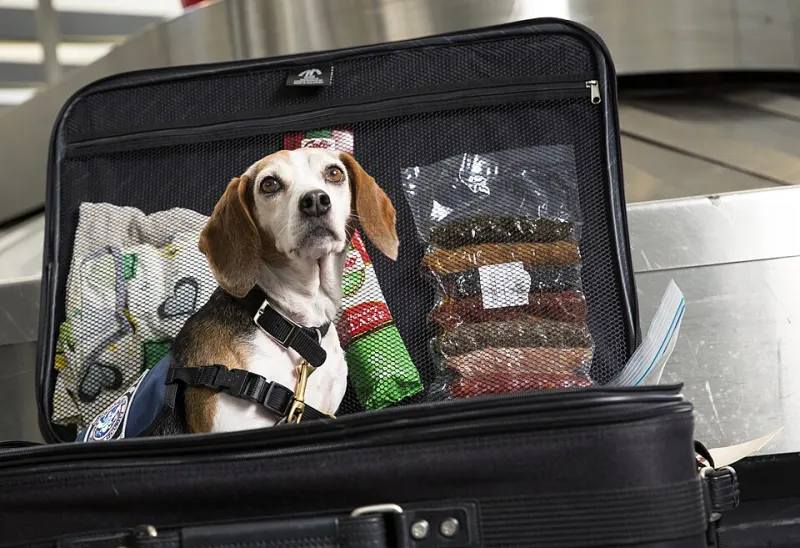
Photo: CBP Photography, Public domain, via Wikimedia Commons
On a travel commission, the itinerary is a liar. It tells you the story is at the destination: the market, the overlook, the cathedral, the restaurant with the famous sign. And then you spend four hours in a terminal, waiting, and the best frame of the whole assignment happens between Gate B12 and a stale pretzel.
I used to think of transit as dead time. Now I think of it as the room where the performance drops. In an airport or a train station, people are not quite themselves yet and not quite the version they plan to be when they arrive. They are in between. That is a very good place for a portrait.
Transit Is a Costume Change
Watch a business traveler in a boarding lounge. The shoes are off, the blazer is folded over a bag, the face has gone slack. Watch a family on a platform, everyone tired and overpacked and quietly relieved to be sitting still. Watch a college student sprawled across two seats with a hoodie over their face.
Nobody is hosting a dinner party. Nobody is posing for the company newsletter. Transit strips away the social costume, or at least loosens it. That is what makes it interesting. You are not photographing people at their most polished. You are photographing them at their most unguarded.
For editorial travel work, that is gold. The destination photographs tell you where someone went. The transit photographs tell you what it cost them to get there.
Asking Without Breaking the Moment
The etiquette is simple and not always easy: ask, mean it, and accept no. I look for a moment of eye contact or a pause in the flow. I keep the ask short. 'I'm a photographer working on a story about travel. Would you mind if I made a portrait while we wait?'
I do not ask people to move, smile, or look at the camera. The whole point is that they are already doing something. I ask them to keep doing it. Sometimes I show the back of the camera afterward. Sometimes I hand over a card. Sometimes the answer is no, and that is the end of it.
The trick is not to break the spell. If someone is staring out a window with their chin in their hand, I do not want them to sit up and perform. I want three frames of the thing that was already happening. Permission matters, but so does speed. The longer I talk, the more the moment becomes about me.
The Frames Before Arrival
Some of the strongest images from travel assignments happen before anyone reaches the destination. A woman asleep against a gate window with her ticket still in her hand. A father balancing a toddler on one knee while the departure board flips behind him. A traveler eating noodles from a paper carton like it is the most important meal of the day.
These are not glamorous photographs. They are not the ones that end up on a tourism brochure. But they are the ones that feel like travel: the waiting, the fluorescent light, the small negotiations with exhaustion. They remind me that a journey is not just the arrival. It is all the hours when nothing is happening except the getting there.
Field Checklist for Shooting in Motion
A few practical notes for photographing people in transit, whether you are on assignment or just killing a layover with a camera:
- Carry one small lens. A 35mm or 50mm equivalent keeps you light and lets you work at a respectful distance.
- Expose for the windows carefully. Airport light is often a blown-out rectangle behind a very dark face. Meter for the person, not the runway.
- Ask once, briefly, and then get out of the way. Do not turn a portrait into a conversation unless the subject wants one.
- Watch security and staff. Do not photograph in restricted areas, and do not block walkways or boarding lines.
- Shoot a few frames and stop. Transit portraits work because they are quiet. Do not make a production of it.
- Keep the background honest. A departure board, a luggage tag, a scratched bench — these are part of the story.
- Be ready before you ask. The best expression often arrives while you are still raising the camera.
- Know when to put the camera down. If someone is upset, late, or clearly done, let the moment be theirs.
The terminal is not a studio in the traditional sense. There is no seamless backdrop, no controlled light, no assistant holding a reflector. But it has something a studio often lacks: people who have not decided yet who they need to be. That is worth waiting for, even if the flight is delayed.