The Sigh Is Not the Story: Portraits With Teenagers Who Aren't Thrilled to Be There

Photo: Attributed to John de Critz, Public domain, via Wikimedia Commons
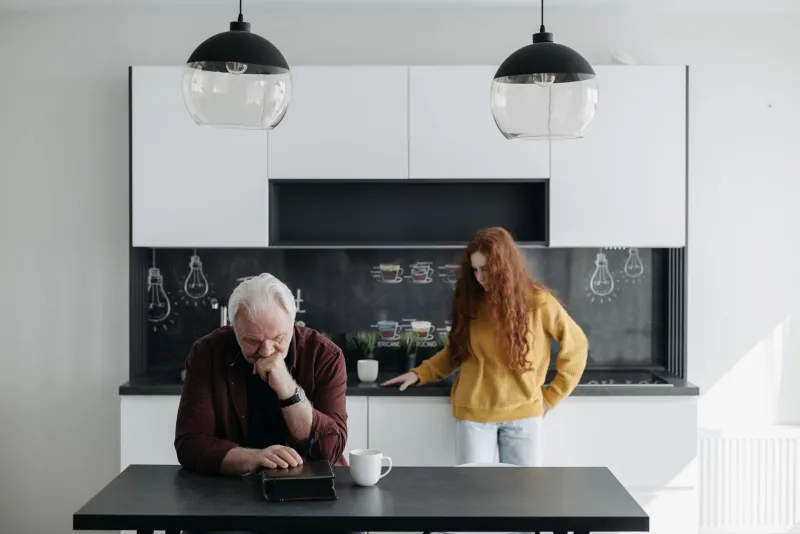
The first thing I notice when a teenager walks into a portrait session is usually the arms. Crossed. Then the sigh. Then the parent's apologetic glance, as if the whole thing is already going sideways.
It isn't. A reluctant teenager is not a bad subject. They are a subject with a boundary, and boundaries are useful information. My job is not to pry the arms open or manufacture a grin. My job is to make a portrait that feels like the person in front of me, even if that person would rather be at a friend's house, at practice, or anywhere with a door they can close.
The First Five Minutes Are a Negotiation, Not a Countdown
I used to treat the opening minutes as a warm-up. Now I treat them as a negotiation. Not a tense one, just an honest exchange of information.
I do not start with the camera. I start with a question that has nothing to do with photographs: What's the worst thing that happened today? What music have you been listening to? Is this jacket actually comfortable, or is it just the one your mom likes?
The parent often helps by stepping back. Not leaving the room, necessarily, but taking a seat outside the immediate circle. A teenager who feels watched by a parent and a photographer at the same time is performing for two audiences. One audience is enough.
I also give choices, but not too many. Not 'Where do you want to go?' That question is a trap. I offer two spots: the porch or the living room window. The brick wall or the gravel driveway. A small choice is still a choice, and a teenager who picks the location has already started participating.
Give Them a Job, Not a Pose
'Stand here and look natural' is a terrible instruction for anyone, but it is especially terrible for a teenager. Nobody knows what natural looks like when someone is pointing a lens at them.
So I swap posing for motion. I ask them to walk toward me and complain about a teacher. I ask them to fix their sleeve, check their phone, open the screen door, lean against the car like they are waiting for someone who is late. I ask them to look at their mom like she just said something deeply uncool. That last one usually gets a real expression, even if the expression is exasperation.
Movement gives the body somewhere to go. It also gives the face something to do besides waiting to be judged. Some of my favorite frames from teenage sessions happen between the instructions, when the shoulders drop and the eyes go somewhere private.
Let the Playlist and the Parking Lot Do Some Work
Control is a big deal at this age. A portrait session can feel like a room where an adult decides everything: where to stand, how to smile, when to be done. I try to hand back small pieces of control without making a big speech about it.
Music is an easy one. I ask them to put on something they actually like, not the family-friendly playlist. Sometimes it changes the whole rhythm of the shoot. Sometimes it just makes the silence less awkward. Either way, it helps.
Location matters too. If a teenager hates the living room, we go outside. If the hoodie is armor, the hoodie stays. If they want to keep their hands in their pockets, I can work with hands in pockets. A portrait does not have to be a correction. It can be a record.
When the Best Frame Is the One You Don't Force
There is a limit to all of this. Sometimes a teenager is not reluctant. Sometimes they are having a genuinely bad day, and no amount of walking prompts or playlist diplomacy is going to change that.
I have learned to recognize the difference between 'I feel awkward' and 'I need this to stop.' If we are twenty minutes in and the shoulders are still up around the ears, I say so. We can take a break. We can try a different room. We can try another day. A forced portrait is not a keepsake. It is a photograph of a kid waiting for permission to leave.
Some of the most honest portraits I have made of teenagers are the ones where they are not looking at the camera. A profile by a window. A kid on the porch steps, elbows on knees. A half-smile that arrived because nobody asked for it.
Parents usually want a photograph that proves the kid was happy, or at least cooperative. I understand that. But the teenage years are not a brochure. They are a passage. The arms crossed, the sigh, the eye roll, the sudden softness when the right song comes on — that is the person in front of me. I would rather photograph that than wait for a version of them that was never going to show up on command.