When the Porch Light Comes On: Family Portraits at the Edge of the House
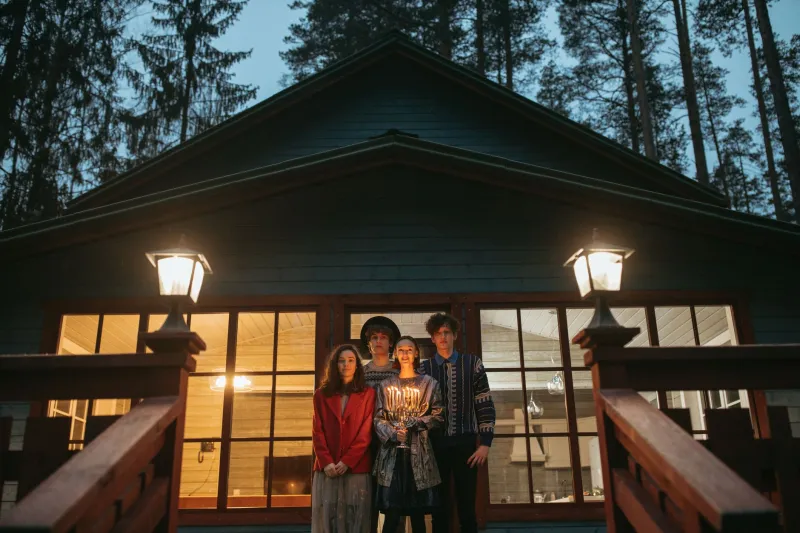
The porch light comes on around 4:45 p.m. now. Not because anyone decided it was evening, exactly, but because the sky over the neighbor's roof has gone that soft, gutless gray that makes everyone inside look at the clock and sigh. In a lot of American homes, that little click of the switch is the unofficial start of the holiday season. The wreath goes up. The dog gets let out one more time. Somebody's uncle pulls into the driveway with a foil-covered pan and leaves the car running while he figures out where to park.
I have made a lot of family portraits on front steps after sunset. Not because I planned it that way, but because the light in the house was flat, the kids were already in their good sweaters, and the porch was right there—a small stage between private life and the block. The more I shoot these sessions, the more I think the threshold is the point.
The porch is not a backup plan
A front step is a strange and useful place. It is outside, but it belongs to the house. It is public enough that people stand a little taller, and private enough that they still lean on each other. You get the doorway behind them, the trim, the house numbers, the wreath, the scuffed paint on the railing. You get the street beyond, too: a parked car, a lit window across the way, a row of trash bins waiting for Tuesday. That is not clutter. That is the neighborhood saying, quietly, that this family lives somewhere.
For holiday sessions in 2026, with daylight thinning fast, I have stopped treating the porch as the place we go when the backyard is too dark. It is the set. The house is the backdrop, the doorframe is the frame, and the street is the reminder that a family is not a diorama. They are part of a place.
Start at dusk, not in the dark
The mistake is waiting until the porch light is the only light. If you can, begin twenty minutes before sunset and stay through the blue hour. That window gives you a mix: pale sky, warm bulbs, and enough ambient light to keep faces from going flat. Have everyone gather on the steps while there is still some color in the west. Let them get cold, let them complain, let the little one wander into the yard. The first ten minutes are rarely the pictures. They are the warm-up.
Once the sky goes deep blue, the porch light becomes the main event. A single warm bulb over the door can be lovely—but it can also paint everyone orange from the forehead down and leave their eyes in shadow. I look for a second source: a lamp just inside the door, a string of patio lights, even the headlights of a car parked safely at the curb. Two small lights are easier to shape than one big one.
Exposure, white balance, and the honest mess
Low light on a porch is not a technical problem to eliminate. It is a mood to manage. I would rather keep the scene a little warm and a little soft than blast it into noon. That said, a few practical moves help:
- Expose for the faces, not the porch bulb. Let the light fixture go bright. A blown bulb is fine; a blown-out face is not.
- Watch your shutter speed. People breathe, blink, and shift. If you are handholding, stay fast enough to keep eyes crisp. If the porch is truly dark, use a tripod and ask everyone to hold still for a second—then let them relax.
- Set white balance for the warm bulb, then adjust in editing. Mixed light is normal on a porch. The goal is skin that looks like skin, not a catalog swatch.
- Bring a small bounce or a white foam board. It sounds fussy; it is not. A piece of white poster board leaned against a planter can lift shadows under eyes and make the doorway feel less like a cave.
- Keep a flash in the bag, but use it sparingly. A bare on-camera flash flattens the whole threshold. If you need a kiss of light, bounce it off the porch ceiling or a nearby wall.
Direct people toward the door, not the camera
A porch session can go stiff fast. Everyone lines up shoulder to shoulder, smiles at the lens, and suddenly the picture looks like a closing statement. I try to give them something to do. Open the door. Lean on the frame. Let the grandparents sit on the top step with the kids between their knees. Ask someone to look at the person next to them instead of at me.
The doorway is a natural framing device. It holds people. It also gives the eye a place to rest. When the porch light is behind them, I angle the family slightly so the light rakes across their faces rather than landing on the back of their heads. When the light is above and in front, I watch for raccoon shadows and move people a half-step forward or back until the shadows soften.
The street is part of the story
I do not crop out the street. A little of it—the curb, a neighbor's lit porch, the dark shape of a tree—tells you where this family is. It also keeps the portrait from feeling sealed off. Holiday pictures often try to make a house look like a snow globe. I am more interested in the house as a real place on a real block, with a real dog barking two doors down.
That means being respectful. I stay on the property or the public sidewalk. I do not block driveways or point lenses into neighbors' windows. If a family wants the street in the frame, I keep it as a quiet background, not a documentary of somebody else's evening. The threshold belongs to the family. The neighborhood just happens to be watching.
Why it works
After dark, people stop performing the version of themselves they think a camera wants. The good sweater is still on, but the posture softens. The kids are tired. The grandparents are ready to go inside. The porch light is buzzing. And in that small, imperfect scene, you often get the picture that actually feels like the family: gathered at the edge of the house, halfway between the party and the quiet, lit by a bulb that has been on every December night for years.
The porch light is not a workaround. It is the point.