The Rooms Remember You: Photographing Grown Siblings Before the For Sale Sign Goes Up
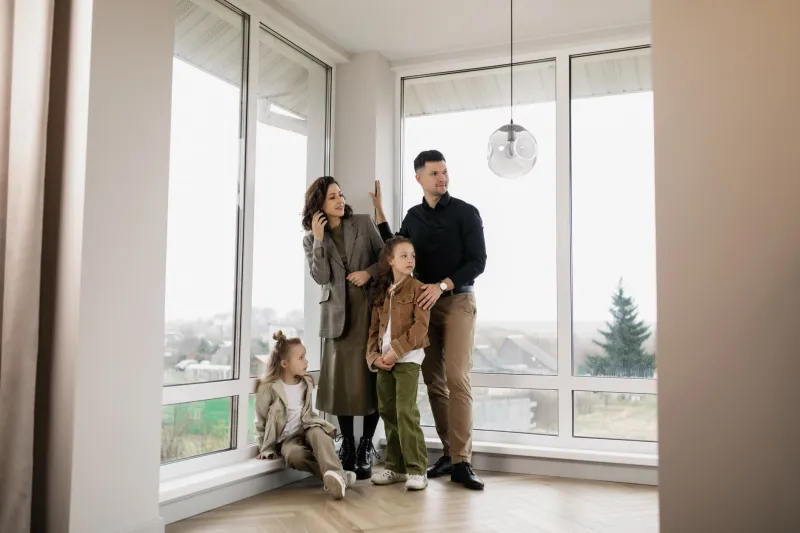
The listing went live on a Tuesday. By Saturday, three brothers and a sister were standing in the front hallway of a house they hadn't all been inside together since the Clinton administration, arguing about whether the hallway had always been that narrow. It had. They just remembered it differently.
That's the day I get called for more often than people realize. Not the wedding. Not the graduation. The weekend before the sign goes in the yard.
It's a strange passage, and an overlooked one. Nobody orders a sibling portrait. Nobody puts 'get photographed with my brother in the room where we fought over the Nintendo' on a to-do list next to 'call the realtor.' But when the house is about to change hands, something in people wants proof they were there. I think that deserves better than a phone propped against a stack of moving boxes.
The Window Is Narrower Than You Think
By the time most families call me, the furniture is half gone. The couch is on the curb with a 'free' sign. The china cabinet is taped shut. Somebody's already made a pile of things nobody can agree on.
Honestly? That's fine. Sometimes it's better. A house stripped down to its bones is a house that shows you what it's made of — the ghost rectangles on the wallpaper where frames hung for thirty years, the scuff on the stair riser from a bike carried up sideways, the pencil marks on the doorframe with names and dates and arrows pointing down, then up. Those details are the story. The sectional sofa was never the point.
What I ask families for is simple: two hours, ideally in the late afternoon, before the last of the box spring gets hauled out. Bring whatever's left. Bring the photo albums if they're still in the closet. Don't clean anything.
Start With the Rooms, End With the Faces
I almost always sequence a shoot like this backward from instinct. Most photographers start with the posed group shot while everyone's fresh. I don't. I start with the rooms.
Here's why: nobody's ready to sit for a portrait in the first fifteen minutes. They're busy being polite, or not-polite, or quietly cataloging what's missing. So I hand them a job. I ask each sibling to walk through the house alone with me and point at one thing they want a picture with. Not the biggest thing. The specific thing.
One brother led me straight to a patch of unfinished drywall in the basement where he'd punched a hole in 1994 and patched it badly and his father had left it that way for thirty years as a monument to teenage rage. His sister wanted the kitchen windowsill where she'd lined up her Beanie Babies in a row. Another wanted the ceiling of the upstairs bedroom, because his brother used to tape glow stars there and some of the adhesive residue was still up.
That walkthrough does two things. It loosens everyone up, and it teaches me the geography of the family — who's the historian, who's the comedian, who's been avoiding the house on purpose for twenty years.
Prompts That Don't Feel Like Prompts
Once the walkthrough is done, I gather them in the living room or on the front steps and just start talking. I rarely say 'look at the camera.' Especially with siblings, the camera is the least interesting thing in the room.
What I do say:
- 'Tell me the worst thing that ever happened in this room.' You'll get a real laugh, and a real face, and usually a correction from a sibling who remembers it differently.
- 'Who got in trouble the most? Stand next to that person.' Instant physical comedy. Instant hierarchy.
- 'Point at the spot where Mom always stood.' This one lands hard. People go quiet, then they go soft, and I get the frame I actually came for.
- 'Face the door. Now face each other.' Simple turns generate the transitions between posed and unposed that I want.
I keep shooting through the corrections. The moment one brother says 'no, it was the OTHER window' and the sister rolls her eyes — that's a portrait. That's the relationship. You can't prompt it. You can only be there when it happens and have your settings ready.
The Old Tensions Are Not a Problem
Some families worry I'll catch them mid-argument. Some families worry I won't.
Look, if four adults who share DNA can spend an afternoon in the house where they learned to fight and not bicker once, that's not a family, that's a focus group. The friction is texture. I don't try to smooth it out. I don't stage a kumbaya lineup on the front steps unless the family actually wants one, and most don't.
What I do instead is place people by instinct rather than by birth order. Pair the two who always end up in the kitchen together. Separate the two who can't be within six feet of each other without a sibling between them. Let the youngest stand in the doorway where they always hovered. The arrangement tells the truth, and the truth photographs better than symmetry.
Details They Remember Differently
Here's the thing I've learned from doing these sessions: every sibling grew up in a slightly different house. Same address. Different childhoods.
One remembers the hallway as long. One remembers it as claustrophobic. One says the kitchen was yellow; another swears it was cream. One swears there was a bench by the front door; there was, until 1998, when their mother gave it to a neighbor.
I photograph those disagreements. I ask them to stand at opposite ends of the hallway and look at each other through it. I ask them to reenact the yellow-versus-cream debate in front of the actual wall. I get a shot of them measuring the doorframe with their hands, comparing their palm spans to the pencil marks of their eight-year-old selves.
Those are the frames that end up framed. Not the group shot on the porch. The proof that they were small here together, in a house that is about to belong to someone else.
Why Phone Snapshots Won't Cut It
I'm not against phone photos. I take a thousand a week. But a phone snapshot in a half-emptied house, taken in five minutes between U-Haul trips, is a record of a transaction, not a passage. The light is bad. The framing is accidental. Nobody's really looking. And once the house sells, you can't go back and reshoot.
This is a closing window, and it deserves an hour of real attention. This is the good stuff. The passage nobody orders.
What to Bring, What to Expect
- Call me before the listing photos, not after. Ideally a week or two before closing.
- Wear what you'd actually wear to a family dinner. Not matching button-downs. Not a funeral suit.
- Bring the box of old photos. We'll work some into the frames.
- Plan for two hours, minimum. The good ones come after the first forty-five minutes.
- Expect to feel a little weird. That's normal. That's the passage doing its thing.
By the end of the afternoon, the brothers had stopped arguing about the hallway. They were standing in it, shoulder to shoulder, not saying much. I got the frame. The one where the light is coming through the transom window the way it always did, and four grown adults are just standing there, being from the same place.
Then the sign went up. But the picture stayed.